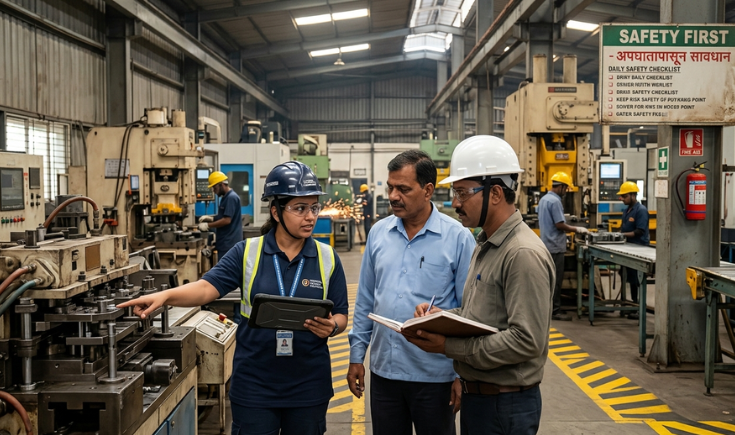
In today’s rapidly evolving industrial environment, maintaining workplace safety is no longer optional it is a business necessity. A well-planned safety risk assessment in industrial facilities helps organizations identify potential hazards, reduce operational risks, and ensure compliance with
Whether you operate a manufacturing plant, warehouse, or production unit, implementing a structured workplace safety risk assessment improves employee protection, enhances productivity, and minimizes downtime. This guide explains the complete industrial risk assessment process in a clear and practical way.
A safety risk assessment is a systematic process used to identify workplace hazards, evaluate the level of risk associated with them, and implement control measures to reduce or eliminate those risks. It plays a critical role in
systems and ensures a safe working environment. In industries where machinery, chemicals, and complex processes are involved, conducting a proper risk assessment in manufacturing industries is essential to prevent accidents and maintain operational efficiency.
Conducting a factory safety risk assessment helps organizations proactively manage risks and maintain compliance with industrial safety standards. It reduces workplace accidents, improves employee confidence, and ensures smoother operations. A strong safety strategy also minimizes financial losses, reduces downtime, and enhances overall efficiency. Businesses that regularly perform workplace hazard identification and risk analysis build a culture of safety that supports long-term growth and sustainability.
Identify Workplace Hazards: The first step is to carefully inspect the facility and identify potential hazards such as machinery risks, electrical faults, chemical exposure, and fire hazards. Proper industrial hazard identification ensures that no risk is overlooked.
Determine Who is at Risk: After identifying hazards, it is important to understand who may be affected, including workers, supervisors, maintenance staff, and visitors. This helps in implementing targeted safety measures.
Evaluate Risk Levels: Each hazard must be evaluated based on its likelihood and severity. Using a risk matrix helps categorize risks into low, medium, or high, allowing better prioritization.
Implement Control Measures: Effective measures such as machine guarding, safety fencing, PPE usage, and employee training should be implemented to reduce risks and improve safety conditions.
Document Findings: Maintaining proper documentation of hazards, risk levels, and actions taken is essential for compliance and future audits.
Review and Update: Regular reviews ensure that safety measures remain effective and new risks are identified as operations evolve.
face multiple hazards that can impact safety and productivity. These include unsafe machinery, lack of proper guarding, faulty electrical systems, inadequate training, and improper handling of hazardous materials. Identifying and addressing these issues early helps prevent serious accidents and ensures a safer work environment.
Successful industrial safety risk management requires a proactive approach. Involving employees in safety planning increases awareness, while using advanced safety equipment improves monitoring and control. Following
ensures compliance with global standards, and regular training programs help employees stay informed. Preventive maintenance and continuous safety audits further strengthen workplace safety systems.
Conducting a proper safety risk assessment offers several advantages, including reduced workplace accidents, improved employee morale, better compliance with regulations, and lower operational costs. It also enhances business reputation and ensures long-term sustainability in competitive industrial environments.
A well-executed safety risk assessment in industrial facilities is essential for building a safe and efficient workplace. By identifying hazards, evaluating risks, and implementing effective control measures, organizations can prevent accidents and improve productivity. In 2026, prioritizing workplace safety risk management is crucial for ensuring compliance, protecting employees, and achieving sustainable business growth.