A smart safety fencing system is an advanced protective barrier equipped with sensors
and interlocks that detect breaches and automatically stop machinery to prevent
accidents.
- Get in Touch
- +91 96840 33261
- Location
- Pune Maharashtra India
- Mail Us
- sales1@swizasafetech.in
Smart Safety Fencing in Industry 4.0 : A 2026 Guide for India
- Swiza Safetech
- March 27, 2026
The Importance of Safety in the Industrial Sector
In India’s rapidly growing industrial landscape, ensuring worker safety has become more complex with the rise of automation and smart technologies. As Industry 4.0 transforms manufacturing, traditional safety measures are no longer sufficient. This is where IoT safety fencing and smart factory safety solutions play a critical role in addressing modern industrial risks. Industrial accidents can lead to serious human and financial losses, making safety a top priority. Advanced
machine guarding systems India
combined with IoT and AI technologies help detect hazards in real time and prevent accidents. These systems enable proactive risk management, ensuring safer workplaces and reducing downtime. Safety today goes beyond compliance—it reflects a company’s commitment to operational excellence. Adopting industrial safety compliance India standards along with smart fencing systems improves productivity, boosts employee confidence, and supports long-term sustainable growth.
Understanding Smart Safety Fencing Technology
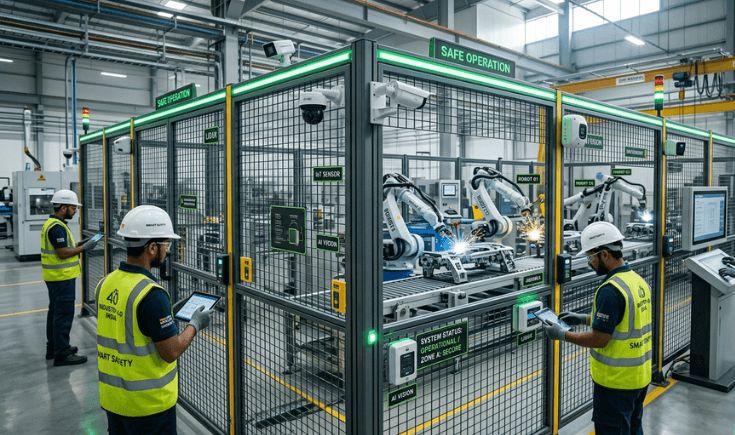
Smart safety fencing is an advanced evolution of traditional barriers, integrating sensors, cameras, and connected devices. These systems monitor restricted areas, detect unauthorized access, and trigger immediate responses to prevent accidents, making them essential for modern industrial environments. At the core of this system is IoT safety fencing, where interconnected sensors collect and transmit real-time data. This allows centralized monitoring and automatic actions like machine shutdowns or alerts when irregularities are detected, improving safety and efficiency. Additionally, AI industrial safety solutions enhance these systems by analyzing data patterns and predicting risks. This predictive capability helps industries prevent equipment failures and reduce unexpected downtime, ensuring smoother operations.
Key Features of Smart Safety Fencing Systems
Smart safety fencing systems offer real-time monitoring, enabling continuous surveillance of industrial environments. This ensures that any abnormal activity or safety breach is detected instantly, which is crucial in high-risk industries. Remote access and control allow safety managers to monitor multiple facilities from a central location. These smart factory safety solutions enable faster decision-making and immediate response to emergencies, improving overall safety management. Integration with other safety systems, such as fire alarms and emergency shutdown mechanisms, further enhances effectiveness. This seamless coordination ensures a comprehensive safety approach and strengthens
industrial safety compliance India
standards.
Benefits of Implementing Smart Safety Fencing in India
Implementing smart safety fencing significantly reduces workplace accidents by providing real-time monitoring and automated responses. This protects workers and minimizes costs related to injuries, legal issues, and operational disruptions. Another key advantage is improved efficiency. Automated machine guarding systems India eliminate the need for constant manual monitoring, reducing human error and allowing better resource allocation. Predictive maintenance capabilities also help extend machinery life. Adopting AI industrial safety solutions and IoT-based systems aligns with Industry 4.0 goals. It enhances competitiveness, strengthens brand reputation, and supports innovation-driven growth in Indian industries.
Regulatory Framework and Standards for Safety Fencing
Industrial safety in India is governed by regulations such as the Factories Act, 1948, and the Occupational Safety Code, 2020. These laws emphasize the importance of safety measures, including fencing and modern protective systems. The Bureau of Indian Standards (BIS) provides guidelines for designing and maintaining safety fencing systems. Compliance with these standards ensures reliability and supports industrial safety compliance India requirements. International standards like ISO 13849 and ISO 14119 further guide the implementation of advanced safety systems. Following these standards helps Indian industries align with global safety practices and improve credibility.
Case Studies: Successful Implementation of Smart Safety Fencing
Several industries in India have successfully adopted smart safety fencing. For example, an automotive plant in Pune used IoT safety fencing to enhance real-time monitoring, reducing accidents and improving operational efficiency. A chemical unit in Gujarat implemented AI industrial safety solutions to monitor critical parameters and predict risks. This resulted in improved safety standards and reduced downtime. In Hyderabad, a pharmaceutical facility integrated
smart factory safety solutions
with fire safety systems. This ensured faster emergency response and better compliance with safety regulations.
Challenges and Solutions in Adopting Smart Safety Fencing
One major challenge is the initial investment required for implementing smart safety systems. However, long-term benefits such as reduced accidents and improved efficiency outweigh the costs. Integration with existing systems can also be complex, especially in facilities using older infrastructure. Proper planning and expert support can ensure seamless implementation of machine guarding systems India. Resistance to change is another barrier. Providing training and demonstrating the benefits of AI industrial safety solutions can help organizations adopt these technologies more effectively.
Future Trends in Smart Safety Fencing for Industry 4.0
The future of smart safety fencing lies in advanced analytics and machine learning. These technologies will further improve predictive capabilities, allowing industries to identify risks before they occur. Innovations in sensor technology and the adoption of 5G will enhance real-time monitoring and communication. This will strengthen
IoT safety fencing
systems and improve responsiveness. Integration with broader industrial IoT ecosystems will enable a more connected approach to safety. These smart factory safety solutions will optimize workflows while ensuring maximum protection.
Conclusion: The Path Forward for Smart Safety Fencing in India
Smart safety fencing is transforming industrial safety in India by combining IoT, AI, and automation. These technologies provide a proactive approach to risk management and workplace safety. As industries adopt industrial safety compliance India standards and advanced safety systems, they can achieve better efficiency, reduced risks, and improved productivity. The shift toward smart safety solutions is essential for sustainable growth. By investing in machine guarding systems India and
AI industrial safety solutions
, businesses can build safer, smarter, and future-ready industrial environments aligned with Industry 4.0 goals.
FAQs
-
What is a smart safety fencing system?
-
Why is safety fencing important in manufacturing?Safety fencing protects workers from hazardous machinery, reduces accidents, and ensures compliance with industrial safety regulations.
-
How do smart fencing systems improve industrial safety?They use real-time monitoring and automation to instantly detect risks and shut down equipment, preventing potential hazards.
-
Are safety fencing systems required by law in India?Yes, machine guarding and workplace safety measures are mandatory under industrial safety regulations and standards.
-
What industries benefit from safety fencing systems?Industries such as automotive, pharmaceuticals, FMCG, robotics, and heavy manufacturing benefit greatly from safety fencing solutions.
