Machine hazards, electrical issues, and fire risks are common dangers.
- Get in Touch
- +91 96840 33261
- Location
- Pune Maharashtra India
- Mail Us
- sales1@swizasafetech.in
has become increasingly important with the rise of automation and heavy machinery. Ensuring a safe environment is essential not only for legal compliance but also for productivity and employee well-being. Identifying risks early and implementing preventive measures helps reduce accidents and improve efficiency.
Industrial safety ensures protection for workers while minimizing financial losses and operational downtime. Companies that follow workplace safety standards in India, implement
, and use factory safety equipment create a secure workplace, improve employee morale, and build long-term trust in their operations. Adopting
, proper
, and industrial safety compliance practices also helps reduce risks and enhances overall productivity.
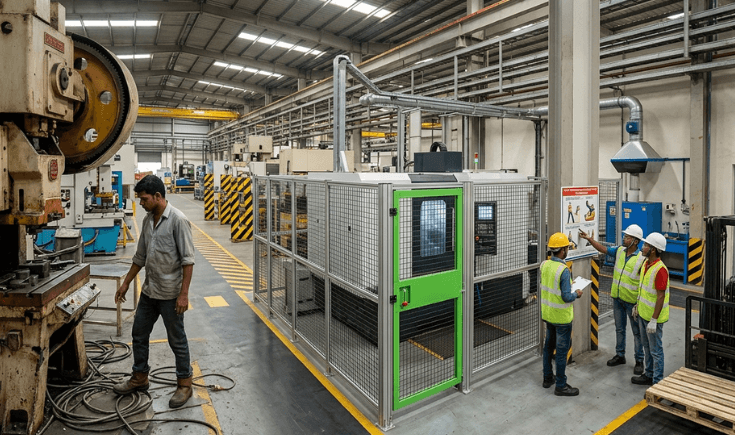
1. Lack of Machine Guarding: Unprotected machinery can cause serious injuries. Installing proper guards reduces risk significantly.
2. Electrical Hazards: Faulty wiring and exposed cables can lead to shocks and fires. Regular inspections are essential.
3. Slips and Falls: Wet floors and cluttered areas often lead to injuries. Proper housekeeping is necessary.
4. Lack of Training: Untrained workers are more prone to accidents. Regular safety training reduces risks.
5. Hazardous Materials: Exposure to chemicals can cause long-term health issues. Proper PPE and ventilation are required.
6. Fire Risks: Lack of fire systems can lead to severe damage. Fire drills and safety equipment are crucial.
7. Unsafe Material Handling: Improper lifting leads to injuries. Use proper tools and techniques.
Conducting regular safety audits is essential to identify potential hazards, ensure compliance with industrial safety standards, and prevent accidents before they occur. Along with this, using high-quality safety equipment such as machine guards, safety fencing systems, and protective gear plays a critical role in minimizing risks and protecting workers in industrial environments. Implementing effective machine guarding systems further enhances safety by acting as barriers between workers and hazardous machinery, reducing the chances of serious injuries while improving operational efficiency. Equally important is fostering a safety-first culture within the organization, where employees are trained, aware, and encouraged to prioritize safety at all times, leading to fewer incidents, higher productivity, and a more secure workplace.
Workplace safety should always be a top priority. By identifying risks and implementing preventive strategies, industries can ensure a safe and productive environment for their workforce. A proactive approach to safety not only protects employees but also strengthens business operations and long-term growth.
