Workplace safety helps prevent workplace accidents, protects employees, improves operational efficiency, reduces downtime, and ensures compliance with industrial safety regulations.
- Get in Touch
- +91 96840 33261
- Location
- Pune Maharashtra India
- Mail Us
- sales1@swizasafetech.in
Workplace Safety Trends Manufacturing Companies Should Follow
- Swiza Safetech
- May 28, 2026
Introduction
Workplace safety has become one of the highest priorities for manufacturing industries across the world as companies focus on improving employee protection, reducing workplace accidents, and increasing operational efficiency. Modern manufacturing environments now involve advanced machinery, robotics, automation systems, warehouses, and high-speed production lines that require strong industrial safety measures to protect workers and equipment.
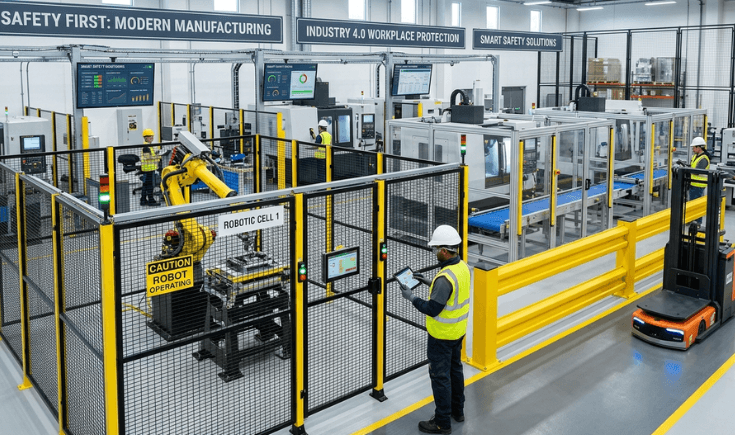
As industries continue moving toward smart manufacturing and Industry 4.0 technologies, companies are increasingly investing in machine guarding systems, industrial safety fencing, robotic safety barriers, and workplace safety solutions to maintain safer working environments.
Smart Machine Guarding Systems Are Becoming Essential
One of the biggest workplace safety trends in manufacturing industries is the growing demand for advanced machine guarding systems. Factories today use high-speed automated machinery, robotic systems, CNC machines, and production equipment that require proper safety barriers and protective enclosures.
Machine guarding solutions help prevent direct contact between workers and dangerous moving parts, significantly reducing workplace injuries and machine-related accidents. Modern machine guarding systems are designed to improve both safety and productivity by creating controlled operational zones around industrial machinery.
Companies are increasingly installing modular machine guarding, industrial safety fencing, interlocking doors, and custom safety barriers to protect workers while maintaining smooth production flow.
Industrial Safety Fencing for Automated Manufacturing
As manufacturing facilities continue adopting industrial automation and robotics, the need for
industrial safety fencing
and
robotic safety barriers
has increased rapidly. Automated production lines and robotic cells require dedicated safety zones to prevent unauthorized access and protect employees from operational hazards.
Industrial safety fencing creates secure workspaces around robotic equipment, automated systems, and heavy industrial machinery. Safety fencing has become one of the most important components of smart factories because it helps companies maintain workplace safety standards while supporting uninterrupted automation processes.
Benefits of industrial safety fencing include:
- 1. Improved employee protection
- 2. Reduced accident risks around machinery
- 3. Better control of restricted zones
- 4. Enhanced operational efficiency
- 5. Support for industrial safety compliance
Warehouse Safety and Material Handling Protection
Warehouse safety has become another major focus area for manufacturing companies because of the growing use of forklifts, material handling systems, automated storage solutions, and logistics operations. Unsafe warehouse environments can lead to employee injuries, equipment damage, and operational disruptions that affect business productivity.
Modern warehouse safety trends focus on creating safer traffic management systems, restricted access zones, and organized storage areas within industrial facilities. Manufacturing industries are increasingly implementing warehouse partition fencing, safety barriers, pedestrian walkways, and impact protection systems to improve worker safety and reduce collisions between vehicles and employees.
Robotics and Automation Safety Solutions
Industrial robotics and automated systems are transforming manufacturing industries by increasing production speed, consistency, and operational efficiency. However, these technologies also introduce new workplace safety challenges that require specialized
automation safety
solutions.
Robot safety fencing, emergency stop systems, safety sensors, light curtains, and access control systems are becoming essential safety components in modern production facilities. These solutions help prevent accidental entry into hazardous robotic work zones and ensure safer interaction between employees and automated machinery.
Workplace Safety Compliance and Industrial Standards
Manufacturing industries are paying greater attention to workplace safety regulations and international industrial safety standards to ensure legal compliance and employee protection. Regulatory authorities are increasingly enforcing stricter workplace safety guidelines related to machine guarding, industrial barriers, employee safety training, and factory risk management.
Modern manufacturing companies are now investing in ISO-compliant safety fencing systems, industrial machine guarding, and risk prevention strategies that improve workplace safety while supporting long-term business growth.
Industry 4.0 and Smart Safety Technologies
Industry 4.0 technologies are changing the future of workplace safety by integrating smart monitoring systems, automation safety tools, and intelligent industrial infrastructure into manufacturing operations. Smart factories now use sensors, automated alerts, safety monitoring systems, and predictive maintenance technologies to identify workplace hazards before accidents occur.
Smart safety systems help businesses reduce downtime, improve productivity, and create safer industrial environments for workers. Manufacturing companies are increasingly adopting digital safety solutions that improve real-time monitoring, employee awareness, and risk management capabilities.
Importance of Employee Safety Awareness
Apart from installing safety equipment and
machine guarding systems
, manufacturing companies are also focusing on employee safety awareness and workplace safety training. Workers who understand industrial safety procedures, machine operation guidelines, and emergency response protocols are less likely to be involved in workplace accidents.
Companies are encouraging regular safety inspections, hazard reporting, and safety workshops to maintain safer working conditions throughout manufacturing facilities. Combining employee training with industrial safety infrastructure creates a complete workplace protection system that benefits both workers and businesses.
Conclusion
Workplace safety trends in manufacturing industries are evolving rapidly as companies adopt automation, robotics, smart factories, and advanced industrial infrastructure. Modern manufacturing businesses now understand that workplace safety is essential for employee protection, operational efficiency, regulatory compliance, and long-term business growth.
From machine guarding systems and industrial safety fencing to robotic safety barriers and warehouse protection solutions, manufacturing companies are investing heavily in workplace safety technologies. By following the latest
workplace safety trends
, industries can create safer, smarter, and more efficient manufacturing environments for the future.
FAQs
-
Why is workplace safety important in manufacturing industries?
-
What are machine guarding systems in manufacturing?Machine guarding systems are protective safety barriers and enclosures installed around industrial machinery to prevent workers from coming into contact with dangerous moving machine parts.
-
How does industrial safety fencing improve workplace safety?Industrial safety fencing creates secure operational zones around machinery, robotic systems, and automated equipment, helping reduce workplace accidents and unauthorized access to hazardous areas.
-
Why are robotic safety solutions important in modern factories?Robotic safety solutions help manufacturing companies protect employees working near automated machinery and robotic systems by preventing accidental entry into dangerous operational zones.
-
What role does warehouse safety play in manufacturing?Warehouse safety helps reduce collisions, employee injuries, and operational disruptions while improving workflow efficiency and storage organization.
-
Does Swiza Safetech provide industrial workplace safety solutions?Yes, Swiza Safetech provides industrial safety fencing, machine guarding systems, robotic safety barriers, warehouse safety solutions, and customized workplace safety infrastructure for manufacturing industries.
